Newsletter Subscribe
Enter your email address below and subscribe to our newsletter
Enter your email address below and subscribe to our newsletter

 ByJohn A
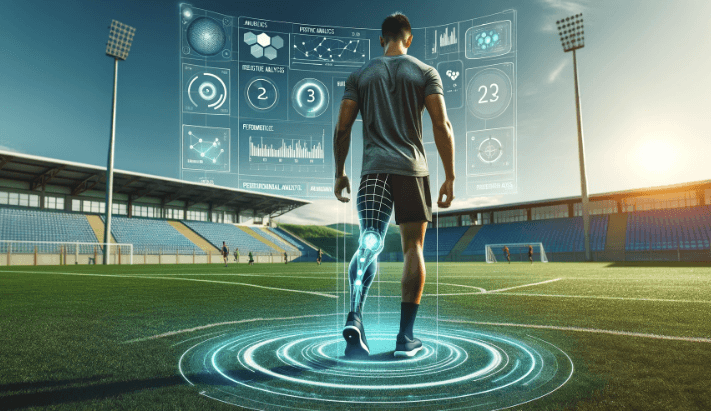
Injury prevention with tech blends wearables, sensors, and analytics to forecast risk moments before harm occurs. Data streams from bodies and environments are translated into transparent, actionable signals. AI-guided coaching focuses on form, load management, and recovery, while privacy and governance guardrails govern data use. Structured prevention plans convert insights into protocols for work and leisure. The question remains: how reliably can these systems translate real-time risk into safer, autonomous practice without compromising safety or consent?
Tech-driven injury prevention integrates data, devices, and decision-support to predict and mitigate risk before incidents occur. It translates streams from wearables, sensors, and records into actionable insights, enabling proactive safeguards without waiting for harm.
This approach emphasizes transparency, consent, and governance, addressing privacy concerns and ethical implications while maintaining autonomy, trust, and freedom to pursue safer work and leisure activities.
Sensor technology that detects risk moments leverages real-time data from wearables, environmental sensors, and machine-vision systems to identify precursors to incidents.
These systems quantify risk moments with transparent metrics, calibration checks, and continuous validation.
Stakeholders gain actionable insights, prioritizing safety without restricting movement.
Emphasis remains on improving sensor accuracy while empowering informed decisions, enabling proactive prevention and responsible freedom within operational boundaries.
AI-driven personal training for prevention leverages individualized data and predictive analytics to tailor proactive safety programs. It translates risk assessment insights into actionable coaching, emphasizing form, recovery, and load management. Wearable alerts notify users of missteps and emerging fatigue, enabling immediate adjustments. The approach remains data-driven, safety-focused, and empowerment-oriented, supporting autonomous, informed decisions that reduce injury risk without restricting personal freedom.
How can data translate into practical safeguards? Data informs a structured prevention plan, converting insights into concrete protocols and checkpoints. Risk communication aligns stakeholders with clear expectations, while user engagement ensures adherence and feedback loops. A proactive framework prioritizes monitoring, iterative adjustments, and measurable outcomes; defenses scale with evolving evidence, translating analytics into moves that minimize exposure and cultivate safer, autonomous practice.
Wearable accuracy varies; current sensors provide probabilistic injury prediction rather than certainty. They support data-driven, proactive monitoring, guiding safety decisions while acknowledging limitations. Confidence improves with robust datasets and validation protocols, yet real-world predictive power remains moderate overall.
75% of users benefit from proactive privacy protections, illustrating impactful data handling. The discussion notes robust privacy safeguards and data minimization practices, emphasizing proactive, safety-focused measures. It presents a data-driven view that respects user autonomy and freedom.
See also: Infrastructure Security Solutions
Tech adoption cannot fully replace hands on coaching; data shows complementary roles. A proactive, safety-focused approach leverages metrics and feedback while preserving autonomy and freedom, with tech augmenting expertise rather than supplanting experienced, adaptive hands on coaching.
How long until results noticeable varies by individual, but data indicates consistent technology-supported programs yield visible improvements within 6–12 weeks, with ongoing injury prevention with tech not relevant to other h2s and safety metrics prioritized.
Safety risks exist but are manageable with proper protocols; continuous monitoring may raise data privacy concerns, requiring encryption, access controls, and transparent governance to protect individuals while enabling proactive safety improvements.
In the quiet arithmetic of prevention, data whispers where risk lies and when to act. Sensors murmur in cadence with the body, flagging moments that demand attention before harm unfolds, while AI translates signals into practical steps. The plan, rooted in evidence, proceeds with disciplined routines, feedback, and load-aware adjustments. Like a lighthouse in a storm, the system’s guidance is steady, transparent, and earned—an allusion to safety’s promise: vigilance that protects, empowers, and sustains active lives.