Newsletter Subscribe
Enter your email address below and subscribe to our newsletter
Enter your email address below and subscribe to our newsletter

 ByJohn A
Infrared heat is a reasonable recovery tool for the same reason any sauna format is: it produces a passive heat-stress response tied to cardiovascular associations in the broader research, and it feels good on tired muscles without the shock of cold exposure. It is not a proven muscle-recovery treatment on its own, and it sits in a different evidence category than cold-water immersion, which has been studied more directly for post-exercise recovery, with results that are genuinely mixed rather than clearly favorable.
A 2015 JAMA Internal Medicine cohort study associated frequent traditional sauna bathing, four to seven sessions a week, with lower rates of fatal cardiovascular events compared with once-weekly use. A 2018 Annals of Medicine study found that sauna bathing combined with cardiorespiratory fitness carried a stronger joint association with lower mortality risk than either factor alone. A related 2018 study in Heart and Vessels measured blood-based cardiovascular markers immediately after a single sauna session and found short-term shifts consistent with an acute heat-stress response, the same general mechanism a post-workout infrared session would trigger. None of the three studies isolated post-workout timing or infrared heat specifically, so the honest framing is that regular heat exposure has a documented association with cardiovascular health, and using it after a workout is one way to build that habit consistently rather than a distinct, separately proven recovery protocol.
A 2025 systematic review and meta-analysis in PLoS One examined cold-water immersion across a range of health and wellbeing outcomes and found a mixed picture rather than a uniformly positive one. A 2023 meta-analysis in Frontiers in Physiology looked specifically at cold-water immersion after exercise for fatigue recovery and performance, also reporting inconsistent results across the pooled trials. A Cochrane review on cold-water immersion for muscle soreness after exercise likewise found the evidence uneven depending on the outcome measured. None of this rules cold exposure out. It does mean cold water is not the clear-cut recovery win it’s often marketed as, which puts it closer to infrared heat than most comparisons suggest.
This is the part that matters most for anyone lifting regularly. Some trials included in the cold-water immersion research suggest that cold exposure soon after resistance training can blunt strength and hypertrophy adaptations, likely by dampening some of the inflammatory signaling that supports muscle growth. Heat exposure has not shown that same interference pattern in the available research. For someone specifically training for muscle or strength gains, that’s a meaningful practical difference between the two recovery tools, even though both are commonly grouped together as post-workout options.
A 2018 review in Frontiers in Physiology examined passive heating strategies, including sauna-style heat exposure, as a practical tool for heat acclimation in endurance athletes. The review found that regular passive heat exposure can produce adaptations relevant to performance in hot conditions, a different outcome than muscle recovery but a useful reminder that heat exposure has documented physiological effects worth taking seriously on their own terms. Someone training for an event in a hot climate has a more direct evidence base to point to than someone hoping heat alone will speed up muscle repair.
A practical approach is to treat infrared heat as a comfortable, low-effort way to add a regular relaxation and heat-exposure habit around training, not as a substitute for sleep, protein intake, or the basics that actually drive muscle repair. Sessions of 25 to 40 minutes at 110 to 145 degrees, a few times a week, align reasonably well with the frequency pattern in the cardiovascular cohort research, even though that research measured a different, higher-heat format. For lifters specifically chasing hypertrophy, keeping cold plunges away from the hours right after a resistance session, while using infrared heat more flexibly, tracks with what the current evidence actually distinguishes between the two.
That depends on how consistently it would actually get used. A dedicated infrared cabin runs $2,000 to $3,800 for a compact two-person model, uses carbon fiber or ceramic panels, and plugs into a standard household outlet, which removes the electrical-upgrade cost that comes with a higher-wattage traditional heater. Low-EMF shielded panels are worth prioritizing for anyone planning frequent, close-range sessions as part of a training routine. Buyers comparing panel wattage, preheat time, and interior footprint across models can see the full lineup before deciding whether a home unit or a gym membership with sauna access makes more sense for how often the recovery routine would realistically happen. The gear matters less than whether it gets used three times a week or sits unused after the first month.
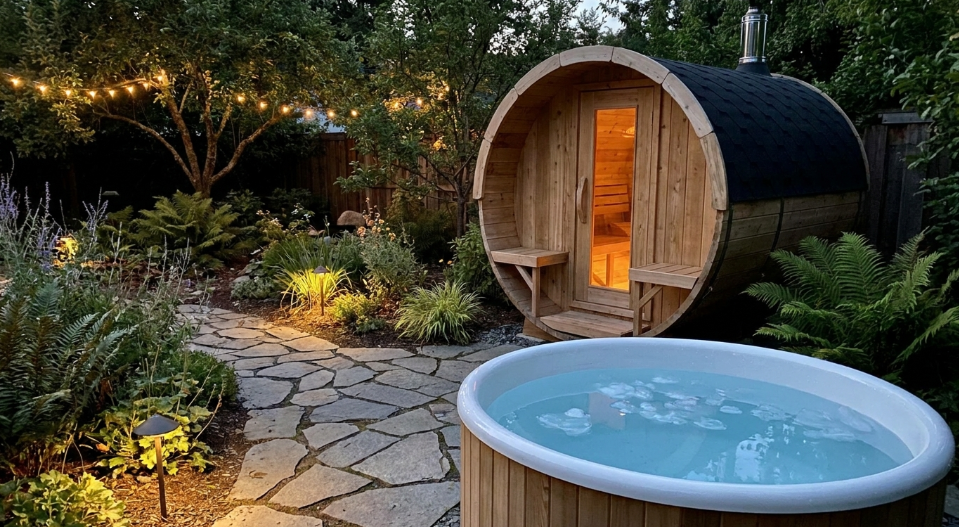
A lot of home setups now include both an infrared cabin and a cold plunge, and using them on different days rather than back to back is a reasonable way to get the general benefits associated with each without the specific timing conflict that shows up in the resistance-training research. Someone lifting three days a week might use infrared heat on rest days for the passive heat-stress exposure tied to the cardiovascular associations, and save cold exposure for after cardio sessions where the hypertrophy-blunting concern doesn’t apply in the same way. This isn’t a protocol validated by a specific trial. It’s a reasonable way to sequence two tools with different, imperfectly overlapping evidence bases so neither one works against the other.
Is an infrared sauna good for recovery after a workout?
It can support recovery through passive heat exposure associated with cardiovascular benefits in broader research, though evidence is stronger for cardiovascular outcomes than muscle-specific recovery markers.
Is heat or cold better for recovery after strength training?
It depends on the goal. Cold-water immersion research is mixed and some trials suggest it can blunt strength and hypertrophy gains soon after resistance training, while heat has not shown that interference.
How soon after a workout should you use an infrared sauna?
There is no established optimal window in the research. Many people wait 20 to 30 minutes for heart rate to settle before a separate heat session.
Can you use an infrared sauna and a cold plunge on the same day?
Yes, many people alternate the two, though combined research is limited. Spacing cold exposure away from resistance training is reasonable if muscle growth is the priority.